
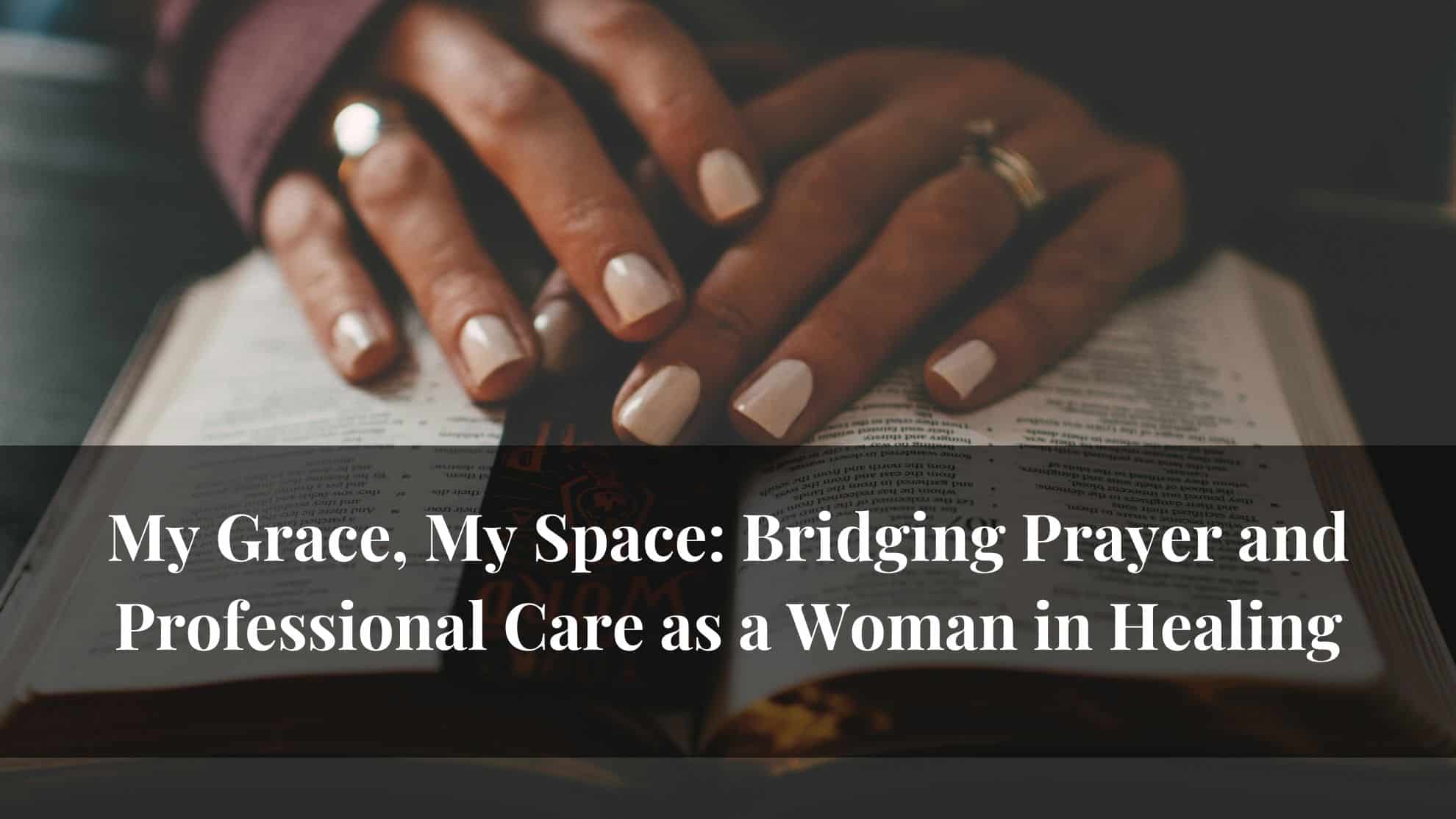
I consider myself to be a woman of insight, professional accomplishment, and emotional intelligence. As a seasoned school psychologist, a mother, and a 50-year-old African American woman who has walked through life’s fire and emerged with clarity and compassion, my journey exemplifies the delicate dance between faith and healing. I devote myself to bridging the gap between the church pew and the therapist’s chair.
Growing Up in Faith
Raised in a home where religion anchored life, my sister and I grew up in the shadow and strength of my mother, a woman shaped by the deep south during the Jim Crow era. My parents’ migration to the north in the 1950s gave us opportunities to live and thrive in the big city of Chicago. My mother taught us resilience, discipline, and the power of prayer. I grew up attending church regularly, and my mother’s unwavering faith was a constant in our lives.
A Spiritual Detour and Return
Like many young adults, I took a spiritual detour during my 20s and 30s. I stepped away from the church, not in rejection but in exploration. I strayed for a while, but having my daughter reconnected me to something greater. I found my way back.
The Limits of Prayer Alone
My return to church didn’t come without reflection. Through my lived experiences, personal, relational, and professional, I began to confront a deeper truth: prayer and faith, while essential, do not always fully address the psychological wounds carried from generation to generation.
I was raised to believe that when life got hard, you prayed. You went to church. You talked to God. And I still do all of those things. But I’ve also learned that trauma requires more. It requires understanding. It requires space. And often, it requires therapy.
Facing Trauma and Breaking Stigma
For a long time, I tried to outrun my trauma by achieving. I thought if I earned enough degrees, got the right title, and raised my daughter well, my internal pain would quiet down. But trauma doesn’t care about your intentions or your résumé. It shows up in relationships. It shows up in conflict. It shows up when someone says something that triggers a wound you forgot.
As a woman of color, I understand intimately the cultural hesitancy and sometimes outright stigma around seeking mental health care. For generations of people of color, seeking therapy was considered a sign of weakness, a luxury, or even a betrayal of faith. Like many others, I was told to be strong. To push through. That anything less was failure. But what I’ve come to know is that therapy doesn’t compete with faith; it complements it.
Healing as a Lifelong Practice
Although I have made progress on my own healing journey, I understand that the work is ongoing. I’d love to say I’m fully healed, but that isn’t the truth. Healing is a rhythm, a practice to be incorporated in all areas of life. For me, trauma responses still show up in relationships and conversations. But now I am more equipped to recognize them. I name them. I have tools to deal with them. I don’t let them control me.
Integrating Psychology and Faith
As a school psychologist, I bring this layered understanding into my practice. I recognize the generational cycles of trauma in children and families and seek to create space for emotional truth and cultural context. My work to promote the self-care of mental health treatment is not only a clinical imperative but also my personal mission.
Normalizing Mental Health in Communities of Color
Now that mental health care is finally beginning to be normalized, especially in communities of color, I want my voice to be both a bridge and a beacon. It is 2025, and society is finally accepting the aphorism, “It’s okay not to be okay.” More and more people are taking progressive steps towards healing and balance. I stand at the intersection of science and spirit, therapy and theology, believing that healing is not about choosing between faith and mental health but about embracing both.
A Legacy of Wholeness
For the women who are watching me, my daughter, students, and community, I am proof that wholeness is possible. Not because the wounds never existed, but because I dared to tend to them, with both prayer and professional care.
I believe God can heal and I also believe He gave us therapists, psychologists, and counselors for a reason.